Description
Fire Clay Price in Bangladesh: 25kg Fire Clay Bag for Furnace and Kiln
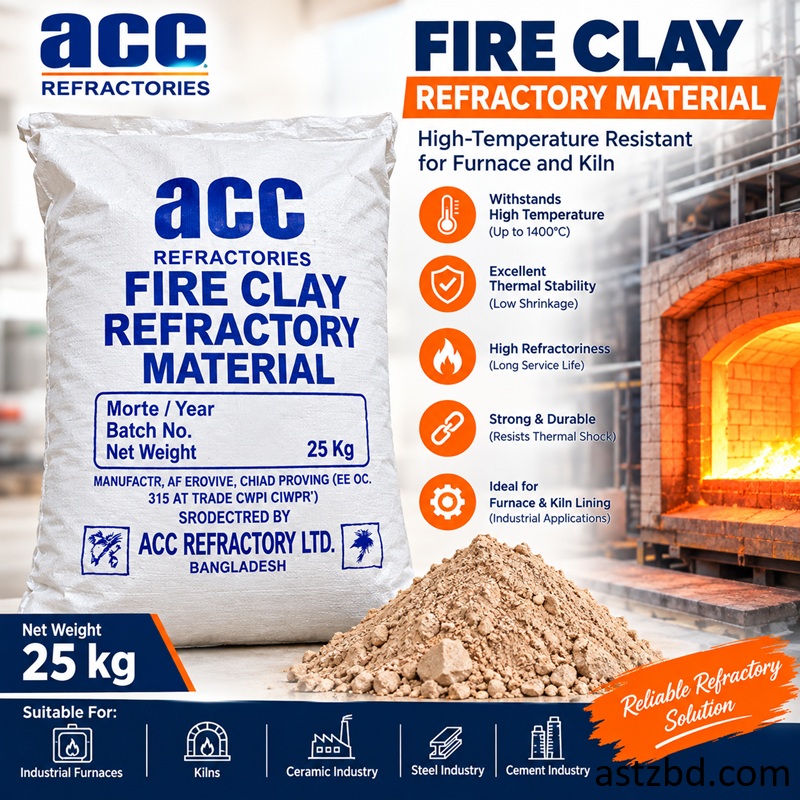
Looking for Fire Clay 25kg Price in Bangladesh with clear specifications and dependable delivery? ASTZ supplies a 25 kg bag of dry refractory mortar and patching mix for ৳[PRICE]. This Fire Clay Bag 25kg is made in India, packed in a woven bag with a moisture-proof liner, and designed for fire brick joints, furnace repairs, kiln maintenance and oven building.
This page gives you the full technical specification, explains what fire clay is and how to mix and apply it, compares it with refractory cement, castable and bentonite in a single table, and answers the questions buyers ask most often before ordering.
Fire Clay 25kg Price in Bangladesh: What You Get in the Bag
The price of ৳[PRICE] is for one 25 kg bag of fire clay, model FC-25. The bag contains a dry, light grey to buff powder that you mix with clean water on site. It is supplied as a mortar and patching material, so bricks, tools and water are not included.
Quick facts
- Product: fire clay, dry refractory mortar and patching mix
- Model: FC-25
- Pack: 25 kg woven bag with moisture-proof liner
- Country of origin: India
- Maximum service temperature: 1400°C
- Water to add: 25–30% by weight, which is about 6.25–7.5 litres for a full 25 kg bag
- Application: trowel, brush or ramming
Order one bag for a small repair or several bags for a full lining job. For larger projects, call +8801329100999 and we will quote bulk supply. You can also browse our complete Refractories category to pick up bricks, cement and castable in the same order.
Fire Clay Powder Price in Bangladesh: What Is Fire Clay Powder?
Fire clay is a natural clay rich in alumina and silica that can withstand very high temperatures without melting. For this product the clay is ground into a fine powder with a maximum grain size of 1 mm and bagged dry, which makes it a ready-to-mix refractory mortar for masons and furnace operators.
When you add water, the powder becomes a smooth paste. The paste bonds fire bricks together, fills cracks and worn corners, and seals gaps where heat would otherwise escape. It is an air-setting material: it hardens as it dries and then sinters into a ceramic bond as the furnace heats up. It is not a cement, and it is not a castable, so it is best for joints and patches rather than for casting thick new linings.
Technical Specifications of the Fire Clay Bag 25kg
| Specification | Detail |
|---|---|
| Product type | Fire clay (dry refractory mortar and patching mix) |
| Model | FC-25 |
| Country of origin | India |
| Packing | 25 kg woven bag with moisture-proof liner |
| Al₂O₃ content | 30–35% |
| SiO₂ content | 55–60% |
| Fe₂O₃ content | ≤ 2.5% |
| Refractoriness | ≥ 1500°C |
| Maximum service temperature | 1400°C |
| Maximum grain size | 1 mm |
| Bulk density (dried) | 1.9–2.1 g/cm³ |
| Water addition | 25–30% by weight |
| Setting type | Air setting (dries and sinters with heat) |
| Application method | Trowel, brush, ramming |
| Shelf life | 6 months in dry storage |
| Colour | Light grey to buff |
Refractoriness vs Maximum Service Temperature
Refractoriness (≥ 1500°C) describes how well the clay itself resists softening under heat in a laboratory test. The maximum service temperature (1400°C) is the practical working limit we recommend for a finished lining. Always design your furnace or kiln to stay at or below the service temperature.
Alumina and Silica Content
With 30–35% alumina and 55–60% silica, this is an alumino-silicate fire clay composition, the traditional material for firebrick joints and furnace patching.
Low Iron Oxide
Iron oxide (Fe₂O₃) acts as a flux and can lower heat resistance, so a content of 2.5% or less is desirable for refractory work.
Fine Grain for Thin Joints
A maximum grain size of 1 mm lets the mortar form thin, tight joints between bricks and fill small cracks without leaving voids.
Bulk Density
A dried bulk density of 1.9–2.1 g/cm³ is useful for estimating how much material you need, as shown in the quantity section below.
What Is Fire Clay Used For?
- Fire brick joint mortar
- Furnace wall crack repair
- Kiln door and flue sealing
- Boiler chamber patching
- Building tandoors, stoves and pizza ovens
- Chimney and flue lining repair
- Foundry and crucible furnace maintenance
Who buys it: brick kiln owners sealing walls, doors and flue gaps; furnace operators patching cracked linings; boiler technicians repairing combustion chambers; foundry and workshop teams maintaining melting pits; and bakers and builders constructing ovens and stoves.
Which Refractory Material for Which Job? Fire Clay vs HI-CEM-50 vs Fire Crete Super vs Pilogel Bentonite
Comparing Fire Clay Powder Price in Bangladesh against cement, castable and clay only makes sense when you compare the job as well. These four products look similar on a shelf but do completely different work. The table below puts them side by side, with each product linked to its own page.
| Feature | Fire Clay 25kg (FC-25) | HI-CEM-50 High Alumina Refractory Cement (25 kg) | Fire Crete Super Refractory Castable (50 kg) | Ashapura Pilogel Bentonite Powder (25 kg) |
|---|---|---|---|---|
| Price (BDT) | ৳[PRICE] | ৳1,500 | Contact for price | ৳520 |
| Material type | Dry fire clay mortar and patching mix | Calcium aluminate cement (binder) | Ready-to-mix high-alumina castable | Sodium bentonite (slurry clay) |
| Pack size | 25 kg | 25 kg | 50 kg | 25 kg |
| Alumina (Al₂O₃) | 30–35% | Approx. 50% | Confirm before publishing | Not applicable |
| How it sets | Air setting; sinters with heat | Hydraulic setting | Hydraulic-setting castable | Does not set; swells into a gel |
| Heat use | Yes, up to 1400°C service | Yes, depends on the aggregate used | Yes, confirm service temperature before publishing | No, not a heat-resistant material |
| Main job | Fire brick joints, crack repair, oven building | Binding refractory castables, lining, patching | Casting new furnace and kiln linings | Piling, diaphragm walling, tunnelling and drilling |
| Not suitable for | Casting thick new monolithic linings | Use alone without aggregate | Small joint and crack work | Any furnace, kiln or boiler lining |
| Best for | Masons and operators doing joints and repairs | Foundries and mills mixing their own castable | Factories lining or rebuilding furnaces | Civil and drilling projects |
How to use the table
- Joint mortar, crack repair, tandoor or pizza oven building: choose the fire clay.
- Mixing your own castable with aggregate: choose HI-CEM-50 as the binder.
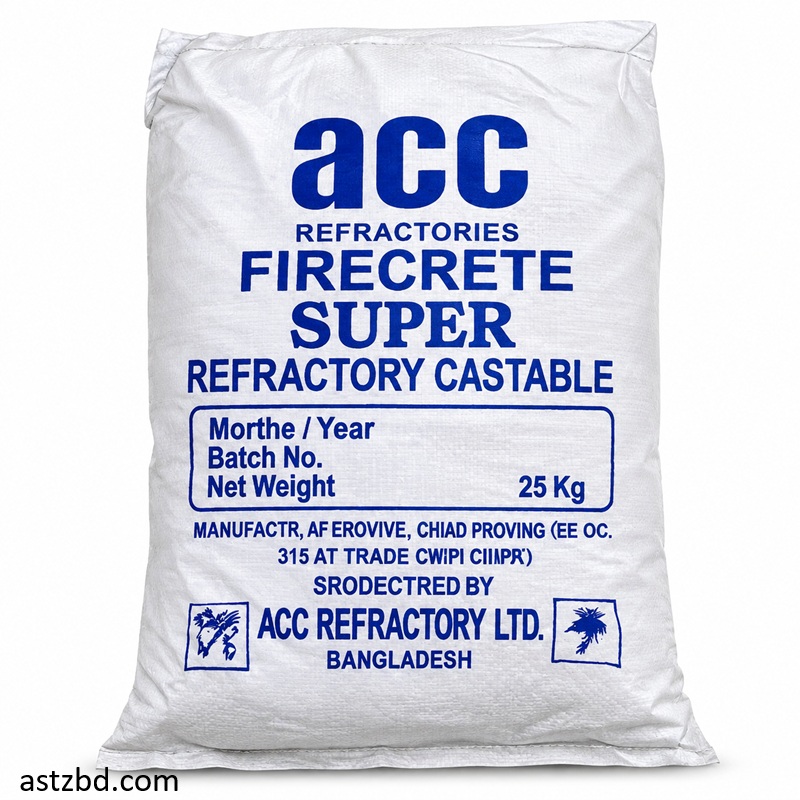
- Pouring a new seamless lining: choose Fire Crete Super.
- Piling, tunnelling or drilling slurry: choose Pilogel Bentonite. It is not heat resistant and must not be used inside a furnace or kiln.
Fire Clay vs Refractory Cement vs Castable: Quick Decision Guide
- A mortar (fire clay) joins bricks and fills small defects.
- A refractory cement (such as HI-CEM-50 or the higher-alumina HI-CEM-70) is a binder that is mixed with aggregate to make a castable.
- A ready castable (such as Fire Crete Super) already contains the aggregate and binder, so you only add water and cast.
- Bentonite is a drilling and piling clay, not a refractory.
If your repair is a crack, a joint or a worn corner on a brick lining, fire clay is usually the simplest and most economical choice. If you are casting a new lining or custom shapes, move up to a castable.
How to Mix and Apply Fire Clay
- Wear a dust mask and gloves, and measure out the quantity you need.
- Add clean water at 25–30% by weight. For a full 25 kg bag that is about 6.25–7.5 litres.
- Mix until the paste is smooth and free of lumps. Too much water weakens the bond after drying.
- Clean the brick or surface of loose dust and dampen it lightly so it does not pull water out of the mix.
- Apply with a trowel or brush, or ram it into larger gaps, keeping joints thin and tight.
- Press bricks together firmly and remove excess mortar.
- Let the repair air-dry. The product page recommends about 24 hours.
- Raise the temperature slowly on first firing so moisture escapes without cracking the clay.
Estimating How Many Bags You Need
One 25 kg bag of dried material occupies roughly 11.9–13.2 litres (25 kg divided by a bulk density of 2.1–1.9 g/cm³). To estimate your requirement, calculate the volume of your joints and patches in litres, allow for waste, and divide by about 12.5 litres per bag. Actual coverage depends on joint thickness, brick surface and how carefully the mortar is applied. If you are unsure, send us your drawings or photos and we will help you estimate.
Why the Fire Clay Price in Bangladesh Varies by Supplier
The price differs from one listing to the next because the material itself differs. Alumina and iron content, grain size, country of origin, packing quality and bag size all change the cost. A cheaper listing may use higher-iron clay, coarser grain or a thinner bag with no moisture protection.
When you compare offers, check the specification, not just the figure. Look for stated alumina and silica content, a stated service temperature, a moisture-proof liner, and a supplier who can advise on mixing and drying. A clearly specified bag with proper packing helps your lining last longer and reduces repeat repairs, which is where the real cost of refractory work sits.
Storage, Shelf Life and Handling
- Store bags in a cool, dry place, off the floor, with the liner closed.
- Use within 6 months of dry storage for the best performance.
- Keep the powder away from moisture, because damp clay lumps and loses bond quality.
- Wear a dust mask and gloves when handling dry powder.
- Mix only what you can apply in one session.
Fire Clay Bangladesh: Delivery, Bulk Orders and Support
ASTZ supplies genuine, clearly specified fire clay, secure packing and technical guidance. We deliver across Bangladesh, and delivery time depends on your location and order size. Our team can advise on water ratio, mixing, application and drying.
For Fire Clay Bangladesh orders of any size, contact us on +8801329100999 or visit our Dhaka shop: Shop F-08, Ittefaq Mor, Mamun Mansion (2nd Floor), 52/2 Toyenbee Circular Road, Dhaka 1203. Working hours are 10 am to 7 pm. You can also use our contact page.
Fire Clay 25kg Price in Bangladesh: Frequently Asked Questions
What is the Fire Clay Price in Bangladesh?
The price depends on the grade, pack size and supplier. At ASTZ, one 25 kg bag of FC-25 fire clay is ৳[PRICE]. Bulk orders are quoted on request.
What is the Fire Clay 25kg Price in Bangladesh?
At ASTZ the price is ৳[PRICE] per bag. The bag is a 25 kg woven pack with a moisture-proof liner, made in India.
What is the Fire Clay Powder Price in Bangladesh?
At ASTZ the price is ৳[PRICE] for a 25 kg bag of dry fire clay powder with a maximum grain size of 1 mm.
How much does one Fire Clay Bag 25kg cover?
One 25 kg bag gives roughly 12–13 litres of dried material. Coverage depends on joint thickness, brick surface and waste, so calculate your joint volume and divide by about 12.5 litres per bag.
What is fire clay used for?
Fire clay is used as mortar for laying fire bricks, as a patching mix for cracks and worn corners, and for sealing kiln doors and flue gaps. It is also used in boiler chambers, tandoors, stoves, pizza ovens and chimney linings.
What temperature can this fire clay withstand?
The recommended maximum service temperature is 1400°C. The refractoriness of the clay is 1500°C or higher.
What is the difference between refractoriness and maximum service temperature?
Refractoriness is a laboratory measure of how well the clay resists softening under heat. The maximum service temperature is the practical limit for a finished lining. Keep your operating temperature at or below 1400°C.
How much water should I add to a 25 kg bag?
Add 25–30% clean water by weight, which is about 6.25–7.5 litres for a full 25 kg bag. Mix until the paste is smooth. Too much water weakens the bond.
How long should fire clay dry before heating?
Let the repair air-dry for about 24 hours, then heat slowly on first firing so moisture can escape without cracking the clay.
Can I use fire clay to build a pizza oven or tandoor?
Yes. Fire clay is used as mortar between fire bricks and to repair and seal oven and tandoor walls. Follow the design of your oven and keep operating temperatures within the 1400°C service limit.
Can I use fire clay for a brick kiln?
Yes. Brick kiln owners use fire clay to seal kiln walls, doors and flue gaps and to patch worn areas. For casting a new lining, a castable such as Fire Crete Super is better suited.
What is the difference between fire clay and refractory cement?
Fire clay is an air-setting mortar and patching mix. Refractory cement such as HI-CEM-50 is a hydraulic-setting binder that is mixed with aggregate to make a castable. Use fire clay for joints and patches, and cement for casting.
What is the difference between fire clay and refractory castable?
A castable is a ready-mixed material of aggregate and binder that you pour or cast into a lining. Fire clay is a fine mortar for joints and patches. Choose a castable when you need a thick, seamless new lining.
Can bentonite replace fire clay?
No. Bentonite is a sodium clay used for piling, diaphragm walling, tunnelling and drilling. It swells into a gel and is not heat resistant, so it must not be used for furnace, kiln or boiler work. See the comparison table above.
Is fire clay the same as ordinary clay?
No. Fire clay is selected for its high alumina and silica content and low iron, which lets it resist very high temperatures. Ordinary clay softens and melts at much lower temperatures.
Is fire clay air setting or hydraulic setting?
This fire clay is air setting. It dries and hardens in air and then sinters into a ceramic bond as the furnace heats up.
How should I store fire clay and how long does it last?
Store the bag in a cool, dry place off the floor with the liner closed. The shelf life is 6 months in dry storage.
Where can I buy Fire Clay Bangladesh wide, including Dhaka?
ASTZ supplies buyers from our Dhaka shop at F-08, Ittefaq Mor, Mamun Mansion (2nd Floor), 52/2 Toyenbee Circular Road, Dhaka 1203. You can also order online or call +8801329100999.
Do you accept bulk orders?
Yes. We supply single bags and bulk quantities for projects. Contact us for a bulk quote.
Does ASTZ deliver outside Dhaka?
Yes, we deliver across Bangladesh. Delivery time depends on your location and order size.
Which country is this fire clay made in?
This fire clay is made in India.
Related Products
- HI-CEM-50 High Alumina Refractory Cement (25 kg) — ৳1,500
- HI-CEM-70 High Alumina Refractory Cement (25 kg) — ৳1,720
- Fire Crete Super Refractory Castable (50 kg) — contact for price
- Krosaki High Alumina Castable 1850
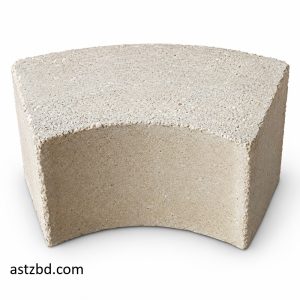
- High Temperature Curved Fire Bricks
- Ashapura Pilogel Bentonite Powder (25 kg) — ৳520, for piling and drilling only
- Refractories category