
Soil PH Meter
Showing all 3 results
-
Sale!
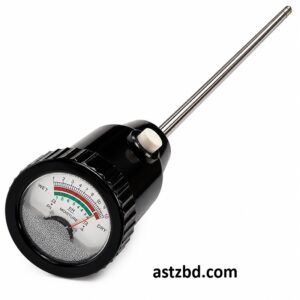
Analog Soil pH Meter for Gardening & Farming
Original price was: 5,500.00৳ .5,200.00৳ Current price is: 5,200.00৳ . Add to cart -
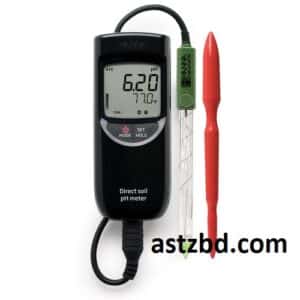
Hanna HI99121 Direct Soil Measurement pH Portable Meter
85,000.00৳ Add to cart -
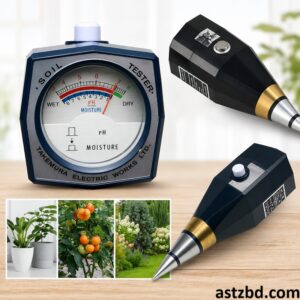
Takemura DM-15 Soil pH and Moisture Tester – Analog 2-in-1 Soil Testing Meter (Made in Japan)
7,000.00৳ Add to cart


Soil pH Meter Price in Bangladesh 2026 — Analog & Digital
Bangladesh grows some of the most diverse crops in South Asia — from paddy and vegetables to tea and fruit orchards. But without knowing your soil’s pH level, even the best seeds and fertilizers underperform. That’s why more farmers, gardeners, and researchers are now checking soil pH meter price in Bangladesh before planting season starts. At ASTZ BD, we stock both entry-level analog testers and professional-grade digital soil pH meters — covering every budget and use case from a small rooftop garden to a full agricultural research setup.
Soil pH directly controls how well plants absorb nutrients. A reading that’s even slightly off the optimal range locks out essential minerals, no matter how much fertilizer you apply. The right meter tells you exactly where your soil stands — in seconds, without sending samples to a lab.
Best Soil pH Meter Price List 2026 in Bangladesh
| Product | Type | Parameters Measured | Price (BDT) |
|---|---|---|---|
| Analog Soil pH Meter (Gardening & Farming) | Analog | pH, Moisture | ৳5,200 |
| Hanna HI99121 pH Meter for Direct Soil Measurement | Digital Portable (Hanna) | pH + Temperature (±0.02 pH accuracy) | ৳85,000 |
Prices may vary based on stock and promotions. Contact ASTZ BD directly for confirmed current pricing.
What to Know Before Buying a Soil pH Meter in Bangladesh
Spending money on the wrong soil pH meter is easy. Most buyers focus on price and miss the three factors that actually determine whether a meter is useful for their specific situation.
Analog vs Digital — Which One Should You Pick?
Analog meters like the Hanna HI99121 pH Meter need no batteries and give instant readings through a needle dial. They’re lightweight, simple, and cost under 5,200 BDT — which makes them the practical first choice for home gardeners and small-scale farmers who need a quick reference, not laboratory precision.
Digital meters, on the other hand, give you a numerical LCD readout with higher resolution. The Hanna HI99121 pH Meter, for example, reads pH down to decimal-level precision — important when you’re trying to fine-tune soil conditions for sensitive crops like strawberries, tea, or specialized vegetables. If your decisions depend on exact numbers rather than a general range, digital is worth the price jump.
Quick rule: Hobby garden or small farm? Go analog. Commercial crop, research, or sensitive plants? Go digital.
Which Soil pH Meter Works Best in Bangladesh’s Agricultural Conditions?
Bangladesh’s soil testing happens mostly outdoors — in full sun, high humidity, and often in wet or waterlogged conditions during monsoon. A few practical points:
Analog meters have no electronics to damage, making them the most durable option in wet field conditions. They can be wiped clean and reinserted into the soil without any risk of water damage.
Digital meters require more care. Keep them away from prolonged submersion, clean the probe after each use, and store them in their protective case. The Hanna HI99121 pH Meter is Japanese-built and handles field conditions better than generic Chinese digital meters, which tend to lose calibration accuracy quickly in humid storage.
For clay-heavy soils common in Sylhet and the haor regions, insert the probe only after slightly loosening compacted soil — forcing the probe damages the sensor tip over time.
Who Actually Needs a Soil pH Meter in Bangladesh?
For Farmers & Agricultural Fields
Bangladesh’s staple crops each have a preferred pH range — paddy performs best between 5.5 and 6.5, while wheat and maize prefer 6.0 to 7.0. Applying urea or TSP to soil that’s too acidic or too alkaline wastes fertilizer and reduces yield. A soil pH meter helps you test before you spend on inputs — and confirms whether lime or sulfur treatments are actually working.
For farmers managing multiple plots, the affordable analog testers let you quickly check each field without a lab turnaround time. For commercial farms where precise fertilizer scheduling matters, the Takemura DM-15 or a digital analyzer gives you the accuracy to make data-driven decisions.
For Nurseries, Gardens & Greenhouses
Plants like rose, blueberry, hydrangea, and most ornamental flowering plants are highly sensitive to soil pH. A 0.5 unit shift from their optimal range causes visible yellowing, stunted growth, or flowering failure. Nursery owners in Dhaka and Chattogram who stock premium ornamental varieties are increasingly using digital soil pH meters to maintain consistent potting mix quality across batches.
For rooftop gardeners and home growers, the 3-in-1 analog tester at 1,250 BDT is more than adequate — easy to use, no batteries needed, and immediately tells you if your pot soil is too acidic or too alkaline for what you’re growing.
For Research Labs & Educational Institutions
Agricultural universities, environmental research institutes, and soil science departments across Bangladesh need instruments that deliver consistent, reproducible pH readings across repeated tests. For this level of use, professional digital meters with known calibration accuracy — like the Takemura DM-15 or a dedicated digital analyzer — are necessary. Lab research depends on data you can cite and replicate, which rules out entry-level analog testers.
For student practicals and field studies, mid-range digital meters strike the right balance between cost and usability — reliable enough for academic data collection without the cost of a laboratory-grade benchtop instrument.
Frequently Asked Questions — Soil pH Meter Bangladesh
What is the price of a soil pH meter in Bangladesh?
ASTZ BD stocks soil pH meters across two distinct ranges — from a basic analog model to the professional Hanna HI99121 digital meter. Contact us directly for confirmed current pricing.
Which is better — analog or digital soil pH meter?
Analog meters are battery-free and perfectly adequate for general farming and gardening use. Digital meters like the Hanna HI99121 deliver ±0.02 pH accuracy, auto-calibration, and automatic temperature compensation — essential for research, commercial crop management, or any testing that requires precise, repeatable results.
Can I use a soil pH meter in wet or flooded soil?
Analog probes handle wet soil well since they carry no electronics and carry no damage risk from moisture. For the Hanna HI99121, insert only the probe into the soil and always keep the meter unit itself dry.
How often should I test my soil pH?
For active farming, test at least once before planting season and once mid-season after fertilizer application. For gardens and nurseries, testing every 2–3 months is enough to catch any pH drift before it affects plant health.
Does ASTZ BD provide genuine soil pH meters with warranty?
Yes. Both the Analog Soil pH Meter and Hanna HI99121 sold through ASTZ BD are genuine products, backed by manufacturer warranty and local after-sales support.
What pH level is ideal for paddy cultivation in Bangladesh?
Paddy grows best in slightly acidic to neutral soil — a pH range of 5.5 to 6.5 is optimal. Soil below 5.0 requires lime treatment before planting to prevent nutrient lockout and reduced yield.
What makes the Hanna HI99121 different from a basic analog soil pH meter?
The HI99121 is purpose-built for soil testing — its conical rugged tip probe inserts directly into soil, the electrode is replaceable, and pH with temperature readings display simultaneously. A basic analog meter gives you an approximate range; the HI99121 gives you precise readings at 0.01 pH resolution with lab-grade accuracy.