
Voltmeter
Showing the single result
-
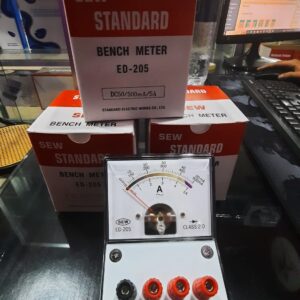
Analog DC Voltmeter ED-205 Taiwan (DC3/15/300V) – Professional Bench Meter for DC Voltage Measurement
4,000.00৳ Add to cart
Voltmeter Price in Bangladesh 2026
Checking the voltmeter price in Bangladesh, the Analog DC Voltmeter ED-205 at ৳4,000 is a straightforward, professional-grade option for anyone who needs a dedicated bench or panel meter for DC voltage measurement rather than a general-purpose handheld tool. This page covers what it does, how to use it correctly, and when a dedicated voltmeter beats reaching for a multimeter instead.
What Is a Voltmeter and Why It’s Needed
A voltmeter measures the electrical potential difference — voltage — between two points in a circuit. Unlike a multimeter that handles multiple measurement types, a voltmeter is built specifically for continuous or repeated voltage monitoring, often mounted permanently on a panel or bench setup.
How a Voltmeter Measures Electrical Potential Difference
The meter connects in parallel across the two points being measured, sensing the voltage difference without significantly affecting the circuit’s current flow. In an analog unit like the ED-205, that voltage moves a needle across a calibrated scale, giving an instant visual reading without needing to interpret digital digits.
Voltmeter Price in Bangladesh 2026
| Model | Price |
|---|---|
| Analog DC Voltmeter ED-205 (DC3/15/300V) | ৳4,000 |
ASTZ Voltmeter — Key Features
The ED-205 covers three DC voltage ranges — 3V, 15V, and 300V — on a single analog dial, giving flexibility for both low-voltage electronics work and higher-voltage DC systems like battery banks or IPS setups. Its Taiwan-made build targets bench and panel-mount applications where a permanent, always-visible voltage reading matters more than portability.
Technical Specifications
Specification Table
| Specification | Detail |
|---|---|
| Measurement Type | DC Voltage |
| Voltage Ranges | 3V / 15V / 300V |
| Display | Analog needle |
| Origin | Taiwan |
| Mounting | Bench/Panel meter |
How to Use a Voltmeter — Step-by-Step Procedure
- Identify the two points in the circuit where you need to measure voltage.
- Select the voltage range on the meter that comfortably covers your expected reading — start with the highest range if unsure.
- Connect the meter’s positive lead to the more positive point and the negative lead to the other, respecting correct polarity for a DC voltmeter.
- Connect the meter in parallel across those two points, not in series with the circuit.
- Read the needle position against the calibrated scale for your selected range.
- Disconnect safely once the reading is recorded.
Reversing polarity on an analog DC voltmeter can pin the needle against the stop, so always double-check positive and negative before connecting.
Voltmeter vs Multimeter — What’s the Difference
A multimeter is a general-purpose tool — it measures voltage, current, and resistance, and you pick it up, take a reading, and put it away. A dedicated voltmeter like the ED-205 is built for a different job: staying connected, often permanently panel-mounted, giving a continuous or at-a-glance voltage reading for equipment monitoring. If you’re checking a battery bank’s charge state at a glance every day, a mounted voltmeter beats pulling out a multimeter every time. If you need occasional spot checks across different measurement types, a multimeter is the more practical choice.
Digital vs Analog Voltmeter — Which One Do You Need
Digital voltmeters give an exact numeric reading, useful when precision to a decimal point matters. Analog voltmeters like the ED-205 give a faster visual sense of where a reading sits — rising, falling, fluctuating — which some technicians prefer for monitoring trends rather than reading a single static number. For panel-mounted, at-a-glance monitoring, analog remains a practical and cost-effective choice.
Buying Guide — How to Choose the Right Voltmeter
AC vs DC Measurement Requirement
Confirm you need DC measurement specifically — the ED-205 measures DC voltage only, so it won’t read AC mains voltage. Match the meter type to what you’re actually monitoring.
Voltage Range for Your Application
The ED-205’s 3V/15V/300V ranges cover common DC applications from low-voltage electronics to battery bank and IPS-level voltages — check your expected reading falls comfortably within one of these ranges.
Panel-Mounted vs Handheld Use
If the meter will stay permanently installed for ongoing monitoring, a bench/panel meter like the ED-205 is the right form factor. For portable, one-off checks, a handheld device is more practical.
Applications — Where It Is Used
Voltmeters are standard in electrical panel monitoring, generator and IPS voltage checks, industrial equipment monitoring, home wiring verification, and general electrician field work where a dedicated DC voltage reading is needed on an ongoing basis.
Why Buy From ASTZBD
Every voltmeter sold through ASTZBD is a genuine unit, backed by warranty coverage, nationwide delivery, and technical support if you need help selecting the right range for your setup.
Frequently Asked Questions — FAQ
What’s a normal voltage reading for household electricity in Bangladesh?
Household mains supply in Bangladesh runs on AC voltage, which the ED-205 does not measure — this analog voltmeter is built specifically for DC voltage readings like battery banks and DC power systems.
Can a voltmeter be left permanently connected to a circuit?
Yes, that’s a common and intended use for panel or bench-mounted voltmeters like the ED-205, since they’re designed for ongoing monitoring rather than one-time spot checks.
What’s the difference between a voltmeter and an ammeter?
A voltmeter measures voltage and connects in parallel across two points, while an ammeter measures current and connects in series within the circuit path.
How long does delivery take in Bangladesh?
Standard nationwide delivery timelines apply — check the product page for current dispatch estimates.