
Soil EC Meter
Showing the single result
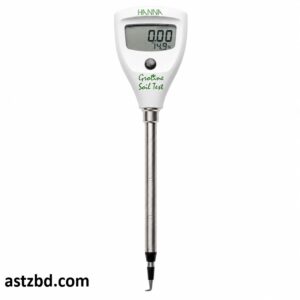
Soil EC Meter Price in Bangladesh
Finding the right Soil EC Meter price in Bangladesh usually comes down to one question: do you need a quick reading or a lab-grade result? At ASTZ, the Hanna HI98331 covers the professional end of that spectrum at ৳18,500 — a direct soil conductivity tester built for anyone who can’t afford a wrong number. This page walks through what the meter measures, how it compares to cheaper combo devices, and how to pick correctly the first time.
What Is a Soil EC Meter and Why Is It Needed?
Electrical conductivity (EC) tells you how easily electric current moves through soil moisture, which directly reflects dissolved salt and nutrient concentration. High EC often signals salinity stress that stunts crop growth; low EC can mean nutrients are being leached away faster than plants can use them. Farmers, agronomists, and soil labs use this single number to make fertilization and irrigation decisions that would otherwise rely on guesswork.
Soil EC Meter Price in Bangladesh (Price Table)
| Model | Price |
|---|---|
| Hanna HI98331 Direct Soil Conductivity Tester | ৳18,500 |
This price sits well above the low-cost combo testers commonly sold as “3-in-1” or “2-in-1” pH/moisture/EC devices. That gap isn’t arbitrary. Combo meters use simplified probes and analog dials that give a rough estimate at best. The HI98331 uses a dedicated stainless steel probe and digital circuitry calibrated specifically for direct soil insertion, so the reading reflects actual soil conditions rather than a diluted extract or a vague needle position. If your work depends on the number being right — not just present — that difference in build justifies the difference in cost.
Hanna HI98331 — Why It’s ASTZ’s Top-Recommended EC Meter
Key Features
The HI98331 reads conductivity straight from moist soil without needing a separate extraction step. Its digital LCD display shows results in seconds, and the stainless steel probe is built to handle repeated field insertions without corroding or losing accuracy over time. Unlike pen-style combo testers, this unit is designed for people who take multiple readings across a field or plot in a single session.
Technical Specification Table
| Specification | Detail |
|---|---|
| Measurement Type | Direct soil conductivity |
| Display | Digital LCD |
| Probe Type | Stainless steel, direct-insertion |
| Calibration | Manual calibration supported |
| Battery | Standard replaceable battery |
| Use Case | Field and lab soil testing |
Types of Soil EC Meters — Combo vs. Direct/Professional Meters
Cheap combo meters bundle pH, moisture, and EC into one analog dial, and they’re fine for a hobby gardener checking a single flower bed once a month. But they weren’t built for repeated, comparable readings across different soil samples — the analog scale drifts, and there’s no true calibration process. A dedicated meter like the HI98331 exists for a different job: agronomists comparing salinity across multiple plots, researchers logging data over a growing season, or labs where a client expects a defensible number, not an estimate. If you’re testing once for curiosity, a combo meter is enough. If the reading feeds into a decision — what to plant, how much to irrigate, whether land is viable for a crop — a direct-reading professional meter earns its price.
How to Measure Soil EC — Step-by-Step Procedure
- Insert the probe directly into moist soil at the desired depth, avoiding air pockets around the tip.
- Allow the reading to stabilize for the time specified in the device manual.
- Record the EC value along with soil temperature, since conductivity shifts with temperature.
- Take readings at multiple points across the field and average them for a representative result.
- Clean and store the probe according to the manufacturer’s care instructions after each use.
Buying Guide — How to Choose the Right Soil EC Meter
Selection Based on Accuracy and Application
A home gardener checking a small plot doesn’t need lab-grade precision. A research project or commercial farm operation does. Match the instrument to how much weight the reading will carry in your decisions.
Combo Meter vs Standalone Professional Meter
Buy a combo meter for casual, low-stakes checks. Buy a standalone unit like the HI98331 when repeatability, calibration, and defensible accuracy matter — particularly for anyone submitting results to a client, university, or research body.
Consideration of Calibration Standard and Range
Check whether the meter supports manual calibration and confirm its measurement range covers the salinity levels typical in your region’s soil. A meter that can’t be recalibrated will drift in accuracy over months of use.
Applications — Where It Is Used
Soil EC meters are standard tools in farm and nursery management, where salinity directly affects yield. They’re used in soil salinity mapping projects, university and research lab soil studies, and agricultural extension work tied to institutions like BARI and BRRI, where consistent, calibrated readings are part of standard testing protocol.
Why Buy From ASTZ?
Every unit sold is a genuine, calibrated Hanna product with manufacturer warranty coverage, delivered nationwide with technical support available if you need help setting it up or reading results correctly.
Frequently Asked Questions (FAQ)
What can a soil EC meter measure besides conductivity?
The core reading is electrical conductivity, which correlates with soil salinity and, indirectly, nutrient concentration in the soil solution.
How do I calibrate the Hanna HI98331?
Follow the manual calibration procedure using a standard conductivity solution before first use, and recalibrate periodically to maintain accuracy.
Is this meter suitable for all soil types?
Yes, it’s designed for direct insertion into most moist soil types, though very dry or extremely compact soil may require pre-moistening for an accurate reading.
How long does delivery take in Bangladesh?
Standard nationwide delivery timelines apply — check the product page for current dispatch estimates.