
Description
Introduction Foot Joint Model with Ligaments
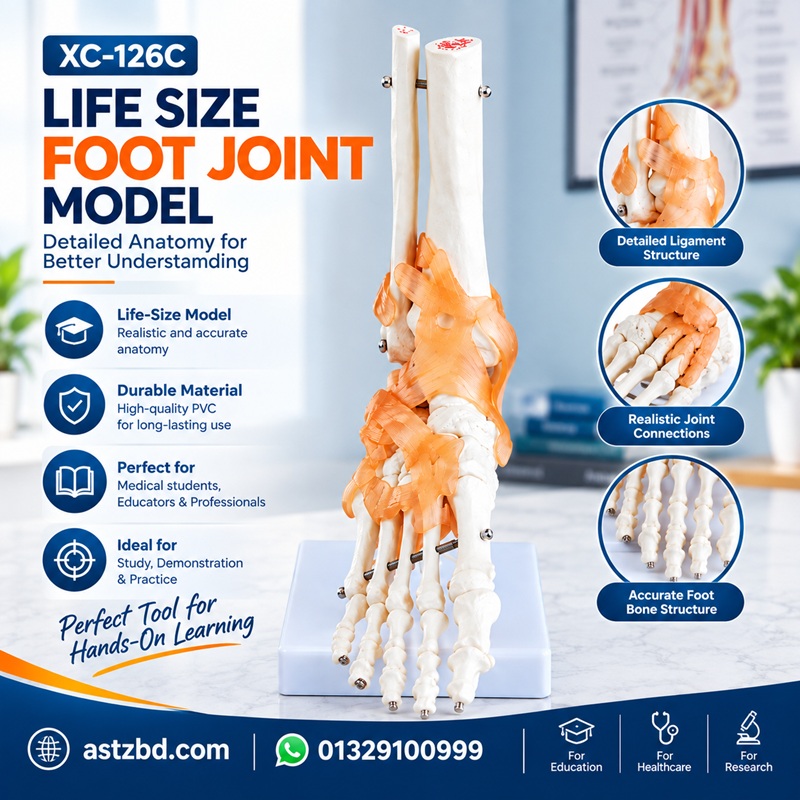
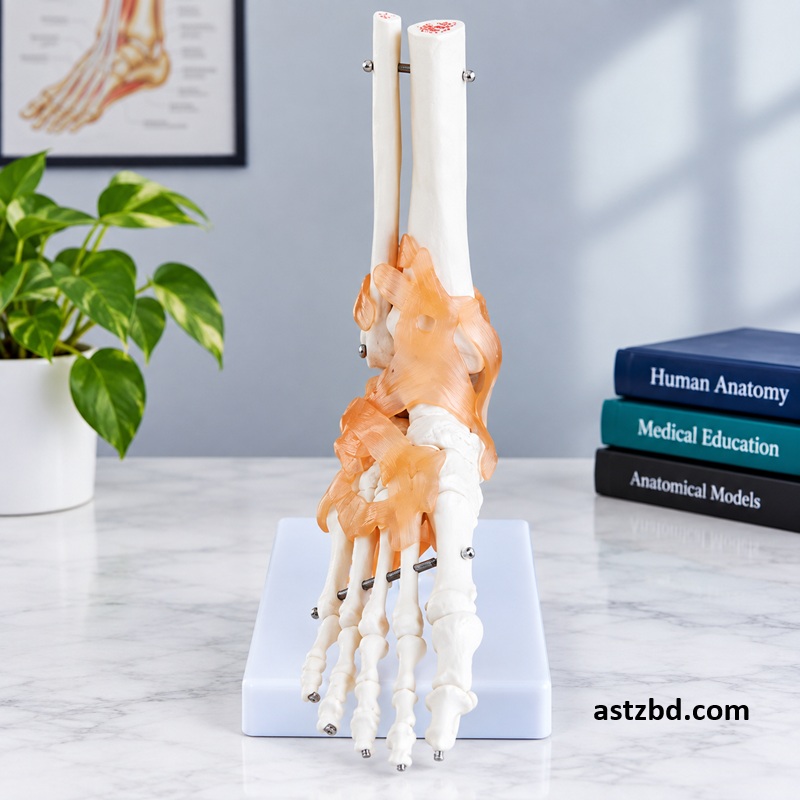
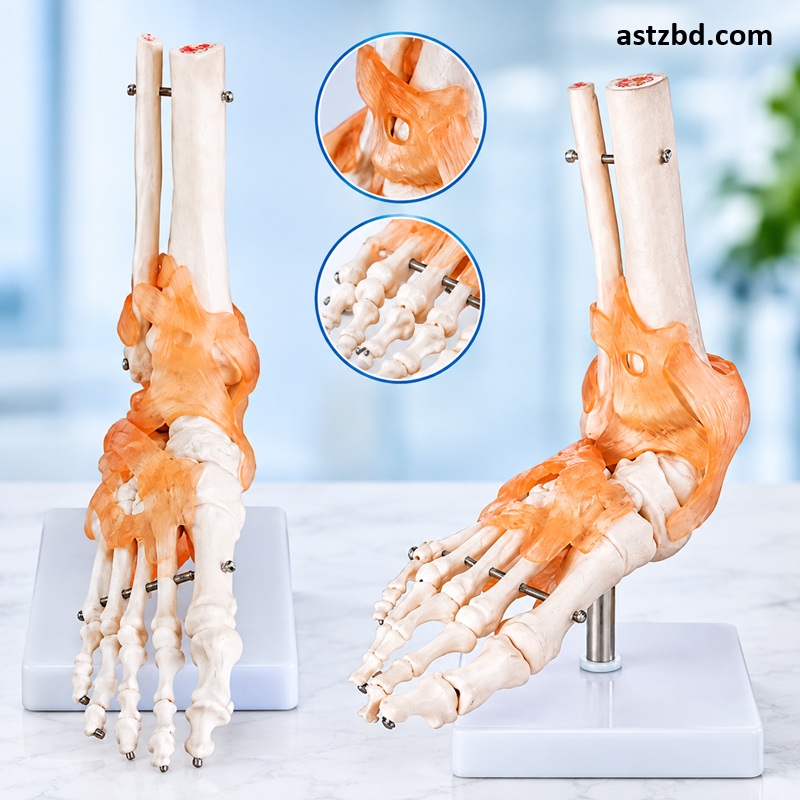
The Foot Joint Model with Ligaments recreates the human foot in true life-size proportions, showing every bone, joint surface, and ligament in anatomically accurate detail. Medical students study bone alignment on this model. Physiotherapy trainers explain joint movement with it. Doctors use it to walk patients through injuries and treatment plans. The model separates and reassembles easily, so learners can examine each joint from every angle. This tool turns a complex structure into something you can hold, rotate, and understand at a glance.
Specifications Life-Size Foot Anatomy Model
| Specification | Detail |
| Product Code | XC-113A |
| Product Type | Human Foot Joint Anatomical Model |
| Scale | Life-Size (1:1) |
| Material | Medical-grade PVC |
| Ligament Representation | Flexible synthetic ligament bands |
| Mounting | Fixed display base |
| Assembly | Detachable bones, reconnects via internal cord |
| Color | Natural bone tone with color-coded ligaments |
| Durability | Impact-resistant, non-fading finish |
| Safety | Non-toxic, latex-free |
| Use Setting | Classroom, clinic, laboratory |
| Country of Origin | Imported |
| Warranty | Standard seller warranty (see listing terms) |
Key Features Foot Ligament Anatomy Model
Shows the complete bony structure of the foot in life-size scale
Displays all major ligaments in a flexible, realistic material
Highlights joint articulation points for movement study
Separates into individual bones for detailed inspection
Reassembles quickly using a connecting cord or wire system
Carries a smooth, durable finish that resists daily handling
Comes mounted on a stable display base
Uses non-toxic, classroom-safe materials
Applications Human Foot Joint Study Model
Medical and nursing college classroom teaching
Physiotherapy and orthopedic training sessions
Patient education in clinics and hospitals
Podiatry and sports medicine consultations
Anatomy lab practical demonstrations
Chiropractic and rehabilitation center training
Academic research and thesis reference
Who Uses This Foot Bone and Ligament Model
Medical Students who need a hands-on reference for foot anatomy exams
Physiotherapists who explain injury mechanics to patients
Orthopedic Doctors who demonstrate joint conditions during consultations
Podiatrists who study foot biomechanics daily
Nursing Instructors who teach musculoskeletal anatomy
Anatomy Lab Coordinators who maintain teaching model collections
Sports Medicine Trainers who assess athlete foot injuries
Frequently Asked Questions (FAQ) Foot Ligament Anatomy Model
Q1: Does this model show real bone structure or a simplified version?
The model reproduces the actual bone structure of the human foot, including all tarsal, metatarsal, and phalanx bones in correct proportion.
Q2: Can I separate the bones for individual study?
Yes, the bones detach from the connecting cord, so you can examine each one separately and reassemble the foot afterward.
Q3: Is the ligament material flexible?
Yes, the ligament bands use a flexible synthetic material that mimics real ligament positioning and movement.
Q4: Is this suitable for classroom teaching?
Yes, medical colleges, nursing schools, and physiotherapy institutes use this model for regular classroom demonstrations.
Q5: Does the model come with a display stand?
Yes, it includes a stable base for desk or shelf display.
Q6: How do I clean the model?
Wipe it with a dry or slightly damp cloth. Avoid harsh chemicals that could damage the surface finish.
Q7: Is this model true to life size?
Yes, the model reproduces the human foot at true 1:1 scale.
Why Buy From ASTZBD Foot Joint Model with Ligaments
- ASTZBD sources anatomical models directly from verified manufacturers, so you get accurate proportions and durable materials every time.
- Our team checks each unit for structural correctness before it ships.
- You get local warranty support and fast delivery across Bangladesh.
- We answer product questions directly, without long wait times.
- Every order from ASTZBD arrives packed securely, protecting delicate ligament parts during transit.