
Description
Introduction Proceq Concrete Rebound Hammer
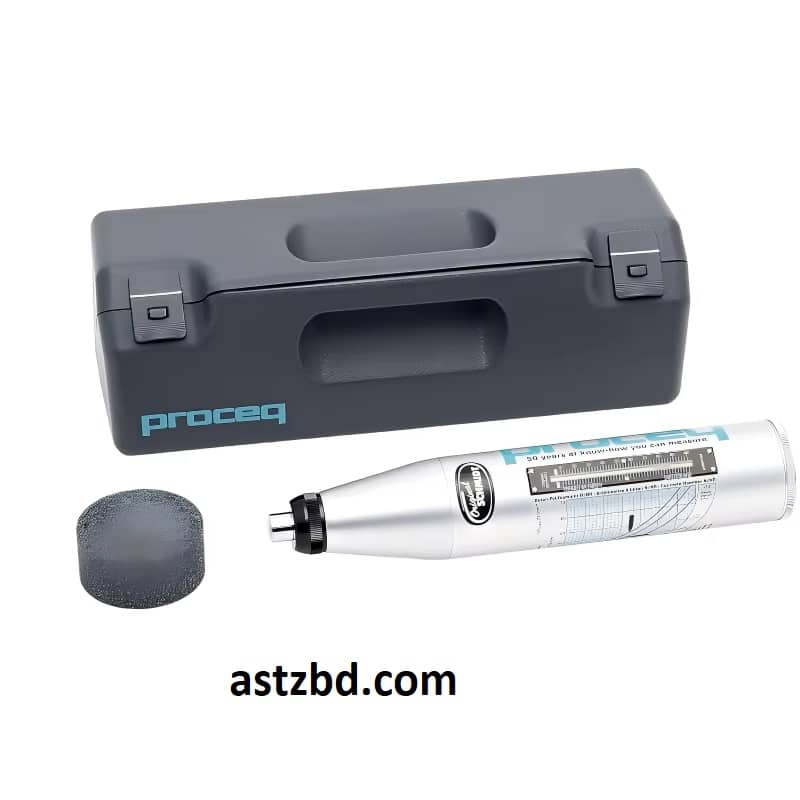
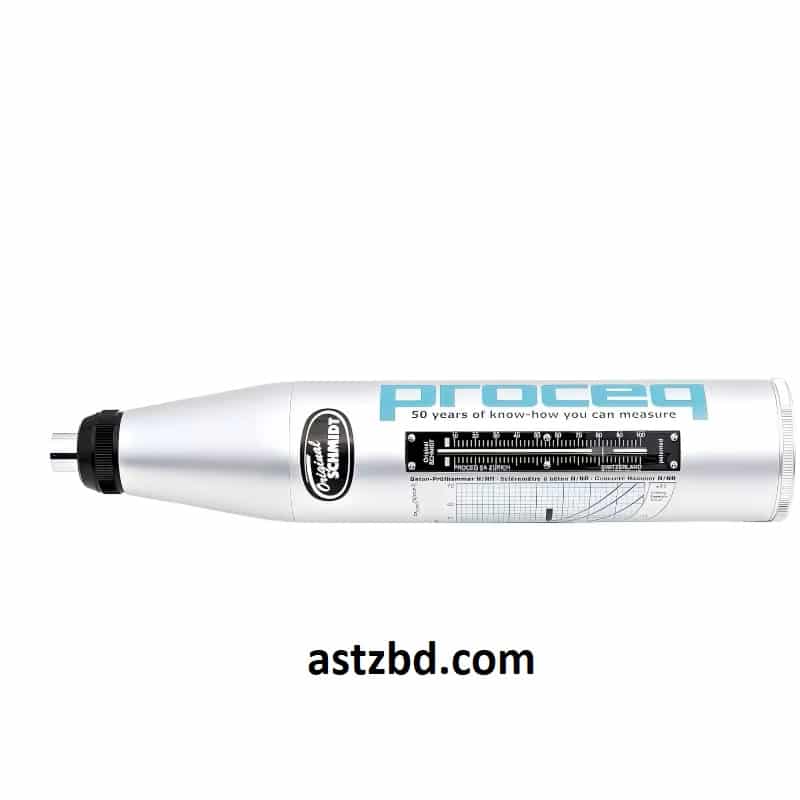
The Switzerland Concrete Rebound Hammer Testing Concrete Strength provides accurate non-destructive testing of concrete structures. It measures surface hardness to estimate compressive strength. Engineers and inspectors use it for quick field evaluation. Switzerland Concrete Rebound Hammer Testing Concrete Strength It supports safe and reliable construction quality control. Moreover, the rebound hammer works on a simple mechanical principle, Switzerland Concrete Rebound Hammer Testing Concrete Strength
Specification Switzerland Concrete Rebound Hammer Testing Concrete Strength
| Specification | Details |
|---|---|
| Product Name | Concrete Rebound Hammer |
| Type | Schmidt Rebound Hammer |
| Testing Method | Non-destructive surface hardness test |
| Measurement Range | Concrete compressive strength estimation |
| Body Material | High-grade metal alloy |
| Scale Type | Mechanical analog scale |
| Operation | Manual spring impact system |
| Accuracy | High precision rebound reading |
| Application | Concrete strength evaluation |
| Usage | Field and laboratory testing |
Technical Specifications Switzerland Concrete Rebound Hammer Testing Concrete Strength
| Specification | Details |
|---|---|
| Model | Switzerland Rebound Hammer |
| Principle | Rebound impact energy measurement |
| Output | Strength estimation (MPa equivalent) |
| Structure | Spring-loaded hammer mechanism |
| Housing | Corrosion-resistant metal body |
| Calibration | Factory calibrated |
| Operation Type | Mechanical manual |
| Testing Surface | Concrete, cement structures |
| Device Type | Non-destructive testing instrument |
Key Features Switzerland Concrete Rebound Hammer Testing Concrete Strength
- Non-destructive concrete strength testing
- Fast and reliable rebound measurement
- High precision mechanical system
- Durable Swiss-quality construction
- Easy handheld operation
- Suitable for field and lab use
- Long-lasting calibration accuracy Switzerland Concrete Rebound Hammer Testing Concrete Strength
Applications Switzerland Concrete Rebound Hammer Testing Concrete Strength
- Building construction testing
- Bridge inspection
- Road infrastructure evaluation
- Civil engineering projects
- Structural quality control
- Laboratory concrete analysis
- Safety inspection services
Who Uses This
- Civil engineers
- Construction companies
- Quality control inspectors
- Government engineers
- Contractors
- Structural analysts
- Laboratory technicians
Frequently Asked Questions (FAQ) Switzerland Concrete Rebound Hammer Testing Concrete Strength
Q1: What does the Concrete Rebound Hammer measure?
The Concrete Rebound Hammer measures the rebound distance of a spring-loaded plunger after it strikes a concrete surface. Engineers use this rebound index along with conversion charts to estimate the compressive strength of hardened concrete. The test is non-destructive, so the structure remains intact.
Q2: Does the rebound hammer give the exact compressive strength?
The rebound hammer gives an estimated compressive strength, not a laboratory-exact value. The conversion chart converts the rebound index (R-value) into an approximate compressive strength in MPa. Engineers confirm critical results with core samples or pull-out tests according to EN 12504-2.
Q3: What concrete thickness does the instrument require?
The Switzerland Schmidt Concrete Rebound Hammer requires a minimum concrete section thickness of 100 mm for reliable readings. Testing on thinner sections produces unreliable rebound values because the opposite surface absorbs energy.
Q4: How do I calibrate the rebound hammer before use?
Users place the calibration anvil on a flat, rigid surface and take 10 impacts on the anvil center. The rebound scale must read within the range stamped on the anvil (typically R = 80 +/- 2). If the reading falls outside this range, users send the instrument for factory service. Switzerland Concrete Rebound Hammer Testing Concrete Strength
Q5: Does the hammer work on vertical surfaces and overhead slabs?
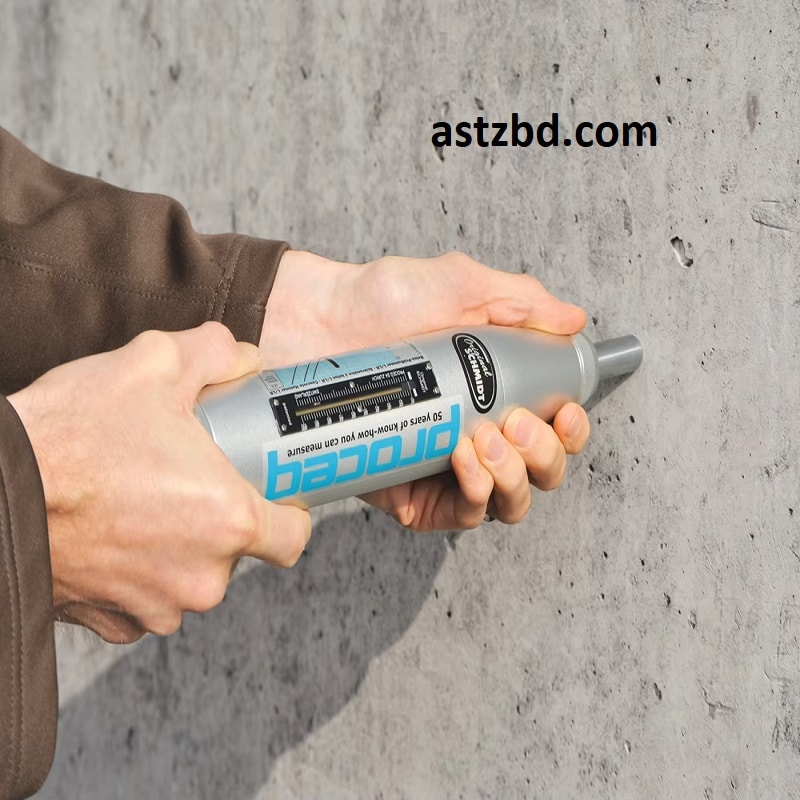
Yes. The Switzerland Concrete Rebound Hammer works on horizontal, vertical, and inclined surfaces. Engineers apply a correction factor from the conversion chart when testing on non-horizontal surfaces, because gravity affects the plunger rebound slightly.
Why Buy from ASTZBD
- Trusted scientific instrument supplier in Bangladesh
- Original and high-quality testing tools
- Competitive pricing for professionals
- Fast delivery across Bangladesh
- Reliable after-sales support
- Secure ordering system
- Wide range of construction testing equipment



Reviews
There are no reviews yet.